Monster Classes
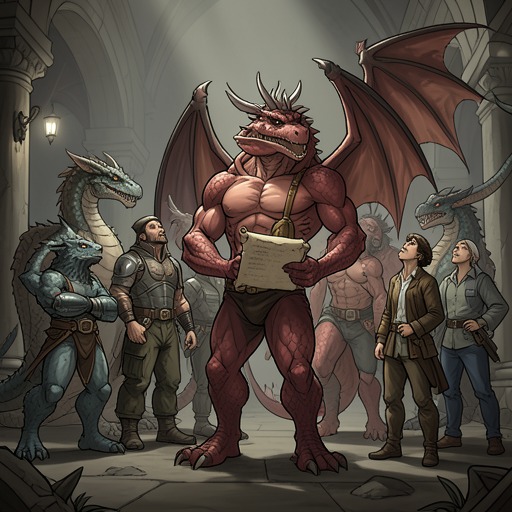
Vainqueur the DragonMonster Classes are a rare category within the Class System, defined by their dependence on intelligent monsters or fiends rather than ordinary training or aptitude. Henry Bright explains that classes fall into five broad categories—Fighters, Spellcasters, Rogues, Crafters, and Monster Classes—with the last available only through deals with monsters. Their rarity is therefore social as well as mechanical: the class is not merely learned, but unlocked through a relationship that the system recognizes as sufficiently meaningful.
Definition and Access
Monster Classes differ from ordinary classes because their entry conditions arise from interaction with powerful nonhuman beings. Henry Bright describes them as classes usually available through deals with intelligent monsters or fiends, making negotiation, allegiance, and service part of the advancement system. The category also destabilizes assumptions about who can participate in the system. When Vainqueur Knightsbane gains a level in Noble through his dragon bloodline and overwhelming self-regard, the notification establishes that a monster can receive class advancement at all; the later discovery that Victor Dalton’s human service can produce a Monster Class extends that disruption in another direction.
Victor’s first Monster Squire level appears immediately after Vainqueur appoints him chief of staff and living signature. The promotion gives Victor responsibility for managing Vainqueur’s paperwork, preparing class progression, and handling duties delegated by the dragon. The system interprets this appointment as the fulfillment of a Monster Squire entry condition, even though Victor has never heard of the class. Henry Bright consequently identifies it as a probable Monster Class and calls the result remarkable. The class formalizes a position that began as an absurdly unequal personal arrangement: Victor’s unpaid administrative labor becomes recognized advancement.
Monster Squire and Measurable Progression
Monster Squire is the clearest demonstrated example of a Monster Class. Its first level grants Victor a substantial package of improvements—30 HP, 10 SP, and one point each in strength, vitality, skill, agility, intelligence, charisma, and luck. The reward is not tied to conventional combat training. It follows Victor’s elevation to chief enforcer and chief of staff, showing that the system can treat delegated authority, practical service, and proximity to a mighty monster as class-bearing activity.
The class later rewards Victor for leadership rather than merely obedience. After he fearlessly leads monsters to victory against superior opponents, he earns seven additional levels in Monster Squire. The advancement grants 120 HP, 70 SP, five strength, four vitality, four skill, five agility, six intelligence, six charisma, and seven luck. It also awards the Monster Lifeforce (Red Dragon), Monster Rider, and Monster Insight Perks. These rewards broaden the class’s meaning: Victor is no longer simply an attendant carrying out Vainqueur’s orders, but a commander whose ability to mobilize monsters produces system-recognized expertise and physical power.
The sequence also illustrates the Class System’s wider ceiling and pressure. Total levels cannot exceed 100, after which a person advances into the God class and can grow no further; increasing total level also makes later advancement harder. Victor’s Monster Squire gains are therefore part of a larger economy in which service becomes experience, experience becomes statistics and Perks, and accumulated power eventually meets institutional limits. At level 30, the system announces that no further levels can be gained without a Crest, although special deeds can still grant Perks. Monster Classes consequently operate within rules that reward extraordinary action but do not abolish scarcity.
Social and Organizational Consequences
Monster Classes help convert Vainqueur’s improvised household into an expanding organization. Victor’s Monster Squire responsibilities include more than paperwork: he is expected to devise ways to sell discarded meat, monster parts, and corpses rather than leaving them for animals, while also preparing Vainqueur’s class progression and teaching appropriate classes to the Kobold Rangers. The class thus accompanies the growth of an administrative structure in which a dragon’s chief of staff must manage commerce, training, and military preparation simultaneously.
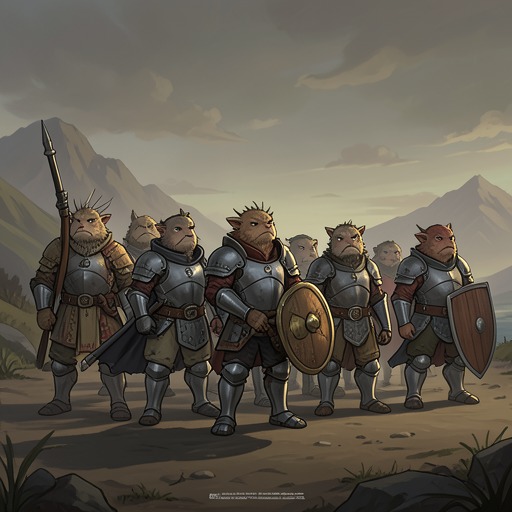
The same logic supports recruitment. During preparations for the war against Furibon, Victor oversees an applicant pool of one hundred kobolds, alongside a troll, a dryad, and a golem with class levels above twenty. Vainqueur’s policy is framed as universal superiority rather than equality, but the practical result is a mixed monster force assembled under his command. Monster Classes make such command legible as advancement: leading creatures who are treated as inferior by their ruler can nevertheless generate measurable power for the human who organizes them.
The institutional consequences extend into commerce and public life. Victor’s duties help create the conditions for selling monster remains, while later monster-centered enterprises include Nethermart, a six-floor magic-item shop constructed by bug fiends and opened to monsters and mortals. The class category therefore belongs to more than a battle mechanic. It participates in the book’s transformation of monster service into administration, recruitment, trade, and collective identity.
Discovery and Narrative Significance
Monster Classes expose the gap between the characters’ assumptions and the system’s actual operation. Victor initially does not recognize Monster Squire, and Henry Bright has never heard of it either; its existence is inferred only after the notification appears. Later, observers are astonished that Vainqueur Knightsbane is a dragon adventurer with class levels, because dragons had been assumed to be soulless beings unable to access the system. Icefang likewise rejects the system as nonexistent until he demands that it appear before him and visibly reacts to the text that manifests in front of him.
This pattern makes Monster Classes a form of procedural revelation. The system does not simply describe identity after the fact; it manufactures identity by attaching levels, statistics, and Perks to conduct. Victor becomes a Monster Squire because a dragon appoints him and because he proves able to lead monsters. Vainqueur becomes a class-bearing dragon through bloodline, ego, and later deeds. The notifications translate relationships that might otherwise remain informal, comic, or coercive into objective-seeming rules.
The category also links personal advancement to the book’s recurring conflicts over treasure, authority, and survival. Vainqueur’s armies fight through mobile wooden bridges against imps and undead during the War of the Hoard, and later the defenders of Murmurin rely on training and organization while Victor directs a delaying defense against an overwhelming army. In both contexts, monster society is presented as capable of coordinated action, while the Class System supplies a language for rewarding the people who make that coordination possible.
Monster Classes are therefore significant because they collapse the boundary between adventuring and service. They make a dragon’s minion into a developing specialist, turn command into a source of experience, and allow the monster-led order around Vainqueur to expand without abandoning the game-like logic of levels and rewards. Their comic premise carries a serious structural consequence: once the system recognizes monster relationships as legitimate routes to power, monsters are no longer merely enemies or obstacles within the world’s hierarchy, but employers, patrons, commanders, and creators of new social roles.